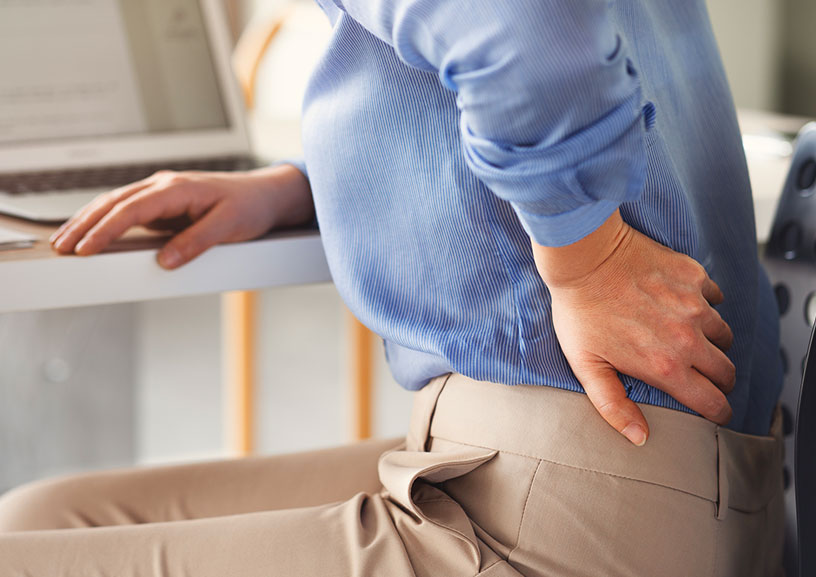
If you’ve recently been told you have a herniated disc after an MRI following weeks of back pain that just wouldn’t quit you’re probably doing a lot of “Googling”. That’s understandable. A lot of what you’ll find online can make the situation feel more alarming than it needs to be. Here’s the reality: a herniated disc is one of the most common spinal diagnoses in adults, and the majority of people who have one recover without surgery.
What’s actually happening in your spine
Your spine is made up of vertebrae separated by discs soft, cushion-like structures with a tough outer layer and a gel-like center. When that outer layer develops a tear or weakens, the inner material can push outward and press on nearby nerves. That pressure is what causes the pain, numbness, or shooting sensation that many people feel down their leg or arm.
It sounds serious, and it can certainly feel that way. But the spine is also remarkably resilient. Studies consistently show that herniated discs often improve on their own over weeks to months as the disc material reabsorbs and inflammation settles.
Why waiting and watching makes sense early on
In most cases, the first approach to a herniated disc isn’t surgery it’s a structured, monitored plan that gives your body a chance to heal. Physical therapy is a cornerstone of this. A good one on one PT program doesn’t just treat the pain; it strengthens the muscles supporting your spine, improves your posture and movement patterns, and helps take pressure off the affected disc over time.
For patients whose pain is more severe or isn’t improving with therapy alone, targeted injections such as epidural injections can reduce the inflammation around the compressed nerve and create enough relief to participate meaningfully in rehabilitation. These procedures are minimally invasive, typically done as outpatient visits, and have helped many patients avoid the operating room entirely.
When to involve a specialist
If your symptoms have persisted for more than a few weeks, if you’re experiencing significant weakness in your leg or arm, or if conservative measures haven’t provided meaningful relief, it’s worth consulting with an interventional spine and pain physician which is a specialist trained specifically in diagnosing and treating spine conditions without surgery as a default.
For residents throughout Morris County, Passaic County, Middlesex County, and the surrounding communities, Dr. Dipan Patel at Garden State Pain offers thorough evaluations and a full range of non-surgical treatment options tailored to your specific imaging, symptoms, and goals.
Dipan Patel, MD
Double Board-Certified Spine & Joint Specialist
Schedule your consultation
www.DipanPatelMD.com