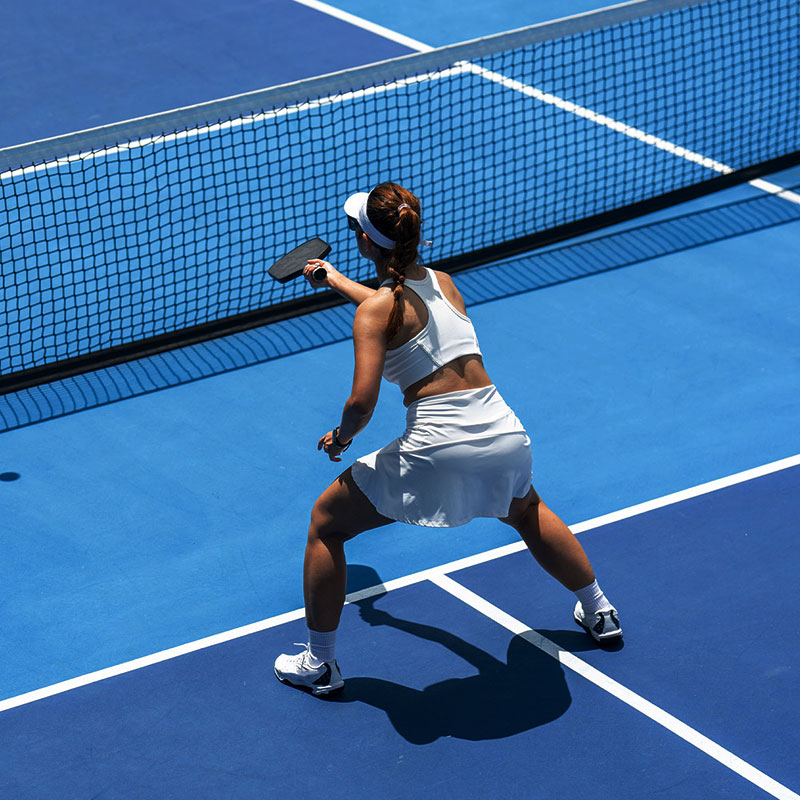
Pickleball is booming in New Jersey – here is how to stay on the court and out of my office.
A New Jersey Pain Doctor’s Guide to Preventing Common Joint and Spine Injuries.
If you drive past any park in Northern New Jersey lately — from Clifton to Florham Park — you will hear it: the distinct pop-pop-pop of a wiffle ball hitting a paddle.
Pickleball is the fastest-growing sport in America, and for good reason. It is social, accessible, and a fantastic cardiovascular workout. But as a pain management specialist, I am seeing a different trend: a significant rise in “Pickleball Poly-trauma.”
Because the court is smaller than tennis, many players underestimate the physical demand. The sport requires sudden stops, pivots, and repetitive overhead motions that can wreak havoc on unprotected joints and spines.
Here is an evidence-based look at the risks and how you can protect yourself.
The “Big Three” Pickleball Risks
1. The Spine: Twisting Under Torque
In pickleball, you are constantly lunging forward while twisting your torso to hit a dink or a volley. This rotation places immense stress on the lumbar discs and facet joints.
- The Risk: Herniated discs and lumbar radiculopathy (sciatica).
- The Fix: Focus on pivoting your feet rather than just twisting your spine. When you turn to hit a ball, your hips and toes should turn with you. If your feet are planted like cement while your upper body rotates, your lower back takes 100% of the torque.
2. The Knees: The “Stop-and-Go” Strain
Pickleball is a game of micro-sprints. The rapid deceleration required to stop at the “kitchen” line puts significant shear force on the knees.
- The Risk: Meniscus tears and aggravation of knee osteoarthritis.
- The Fix: Don’t backpedal. One of the most common causes of serious injury (including Achilles ruptures and falls) is running backward to return a lob. Instead, turn your body to the side, run to the back of the court, and hit the ball.
3. The Upper Extremity: “Pickleball Elbow”
Just like tennis elbow (lateral epicondylitis), this is caused by repetitive overuse of the forearm extensors.
- The Risk: Chronic inflammation in the elbow and rotator cuff impingement from overhead smashes.
- The Fix: Check your grip size. A paddle handle that is too small or too large forces you to squeeze tighter, overworking the forearm muscles. Also, ensure you are hitting the ball in front of your body, not behind you, to save your shoulder.
Essential Prevention Tips
- Wear Court Shoes, Not Running Shoes: Running shoes are designed for forward motion. Pickleball requires lateral (side-to-side) movement. Running shoes have high heels and soft meshes that can lead to rolled ankles. Invest in court-specific shoes with lateral support.
- Dynamic Warm-Up: Cold muscles snap. Spend 5 minutes doing dynamic movements — leg swings, arm circles, and gentle lunges — before you pick up the paddle.
- Hydrate with Electrolytes: Cramping often leads to poor form, which leads to injury.
Where to Play Locally (Safely!)
Ready to practice? Northern NJ is becoming a hotbed for great courts. Here are a few local spots to check out:
- Florham Park: The Life Time fitness center has dedicated indoor courts with excellent surfaces (easier on the knees than asphalt). There are also public courts at the Florham Park Recreation complex on Ridgedale Ave.
- Clifton: Richardson Scale Park and Anzaldi Park have dedicated pickleball-only courts that are very active.
- Montclair/Little Falls: Montclair Pickleball runs unmatched clinics and indoor play sessions that are great for learning proper mechanics.
When to See a Doctor
Soreness after a match is normal; sharp pain is not. If you experience shooting pain down your leg, persistent stiffness in the morning, or a joint that swells after play, “playing through it” is the wrong move.
I specialize in non-surgical solutions to get you back in the game. From targeted injections to regenerative therapies, we can help heal the tissue before a minor strain becomes a surgical problem.
Stay active, have fun, and play smart.
Dipan Patel, MD
Double Board-Certified Spine & Joint Specialist